HOW SPACES ARE CREATED
The Creative Process
It starts with understanding the atmosphere of a place, the emotions it is meant to evoke, and the way people will experience it.
Eight successive layers guide this process from the initial sensation, through light, texture, art, and scent, until all the elements come together to form a cohesive whole.
01 For the body, the senses, and the nervous system
A person in the center of the space
Every design decision affects the way people experience a place.
I create spaces that promote regeneration, a sense of security, and well-being by combining my design experience with an understanding of how the environment affects the body, the senses, and the nervous system.
02 Foundation
Clarity of Form
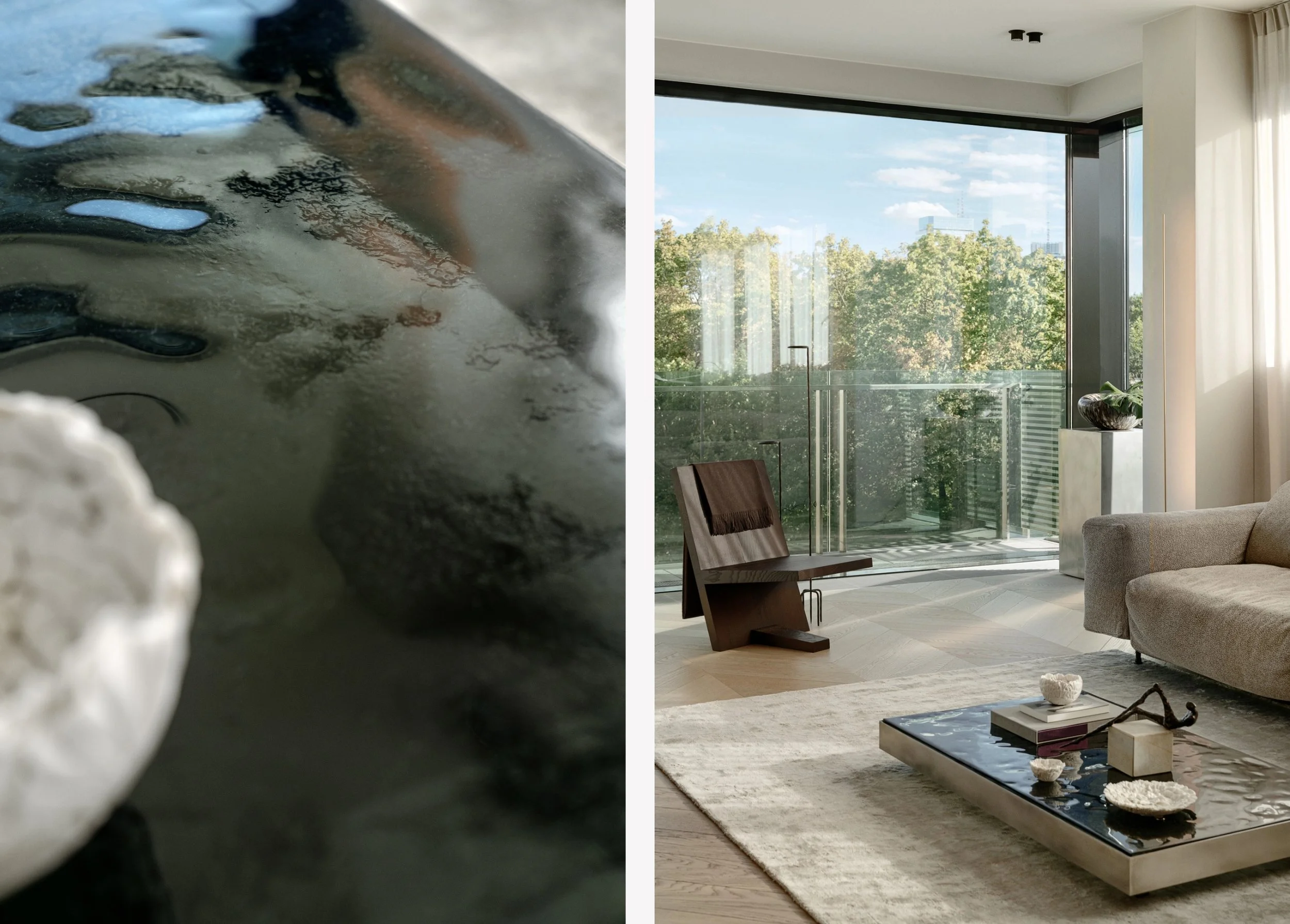
A focus on sensory experience: textures you want to touch, harmonious proportions, and a conscious dialogue between the body and architecture.
A fluid movement through space, visual and acoustic comfort, and a focus not on the image itself but on the way people perceive and experience a place.
03 Matter as a Language
Materials, Textures, and Colors
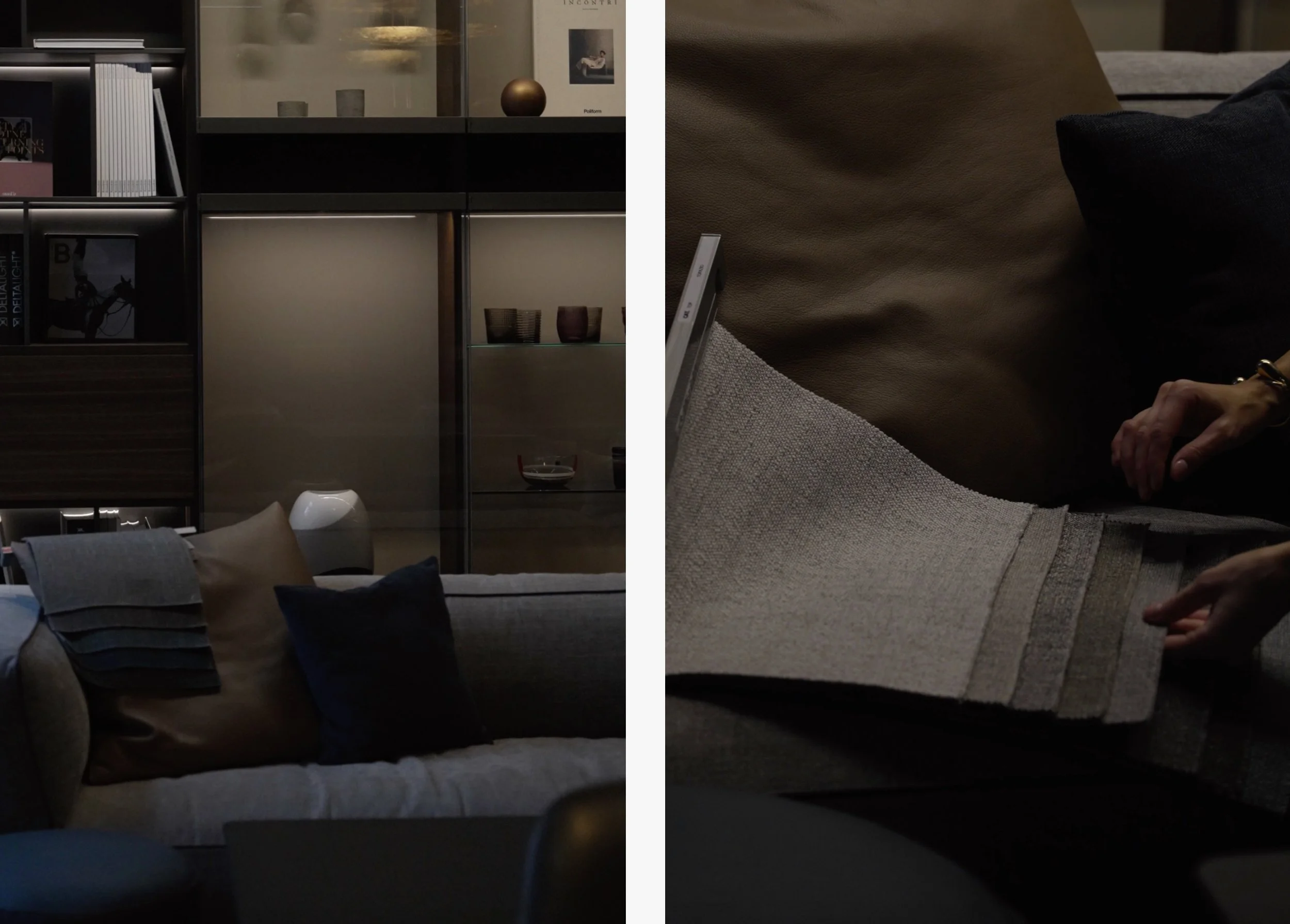
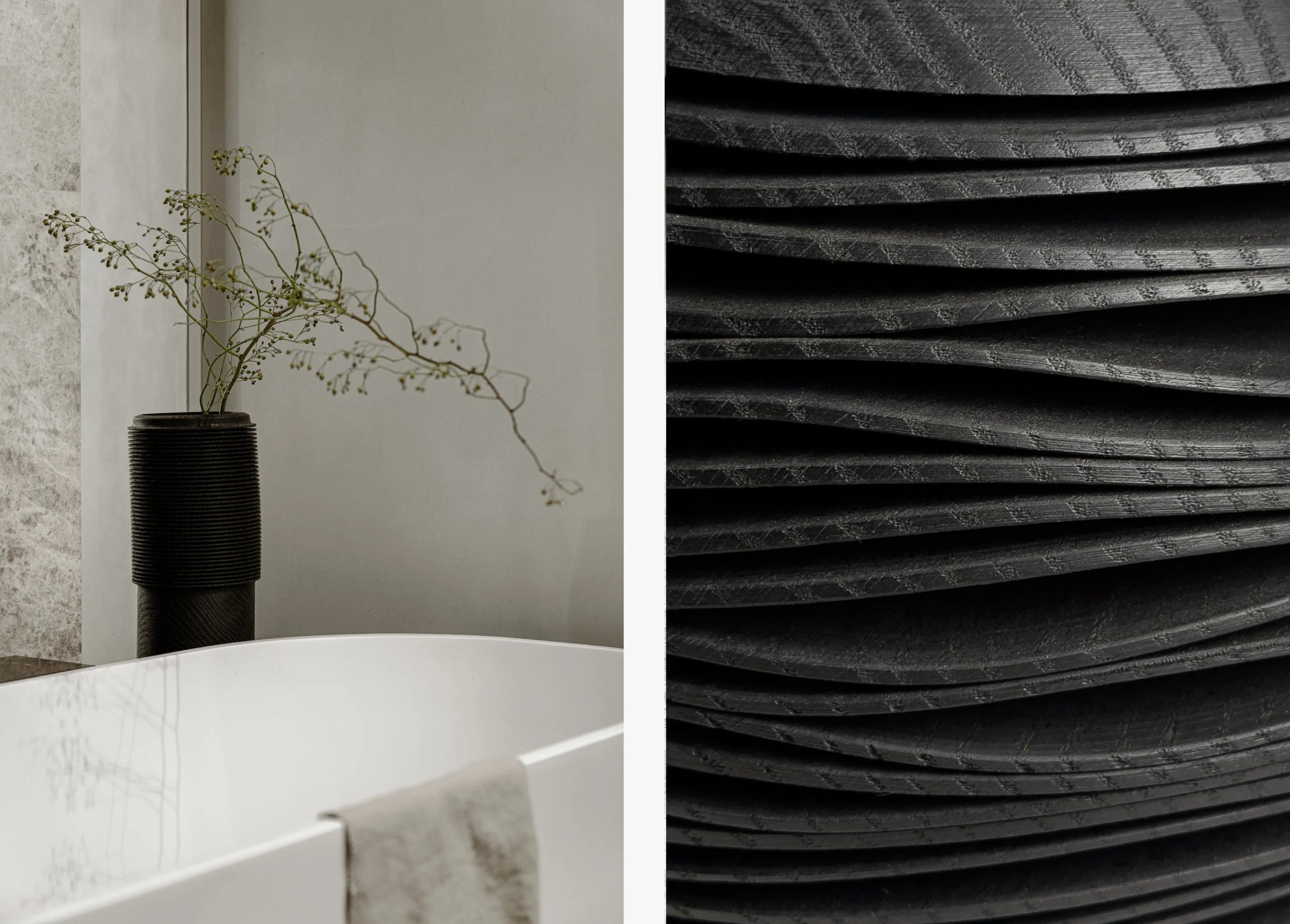
The materials I choose make an impact both visually and through touch. Their subtlety stems from their texture, depth, and the way they respond to light and time. They are complemented by a palette inspired by nature. Shades of white, beige, gray, taupe, and brown, punctuated by deep black or bold color accents.
Every choice is guided by the goal of creating a space that fosters well-being, tranquility, and a sense of harmony. The materials here are not mere decoration. They are an integral part of the experience of the space, reflecting the diversity of nature and the beauty that is revealed through careful observation.
04 Selection of Works
Arts and Crafts
Selection of art, crafts, and objects that reinforce the project’s character and positioning.
Engaging artists, artisans, and creators whose work reinforces the identity of a place and helps shape its unique character.
Creating cohesive relationships between architecture, interiors, art, and the user experience.
So that art and craftsmanship are not merely an addition to the design, but an integral part of the whole.
05 Creating the Atmosphere of a Space
Light
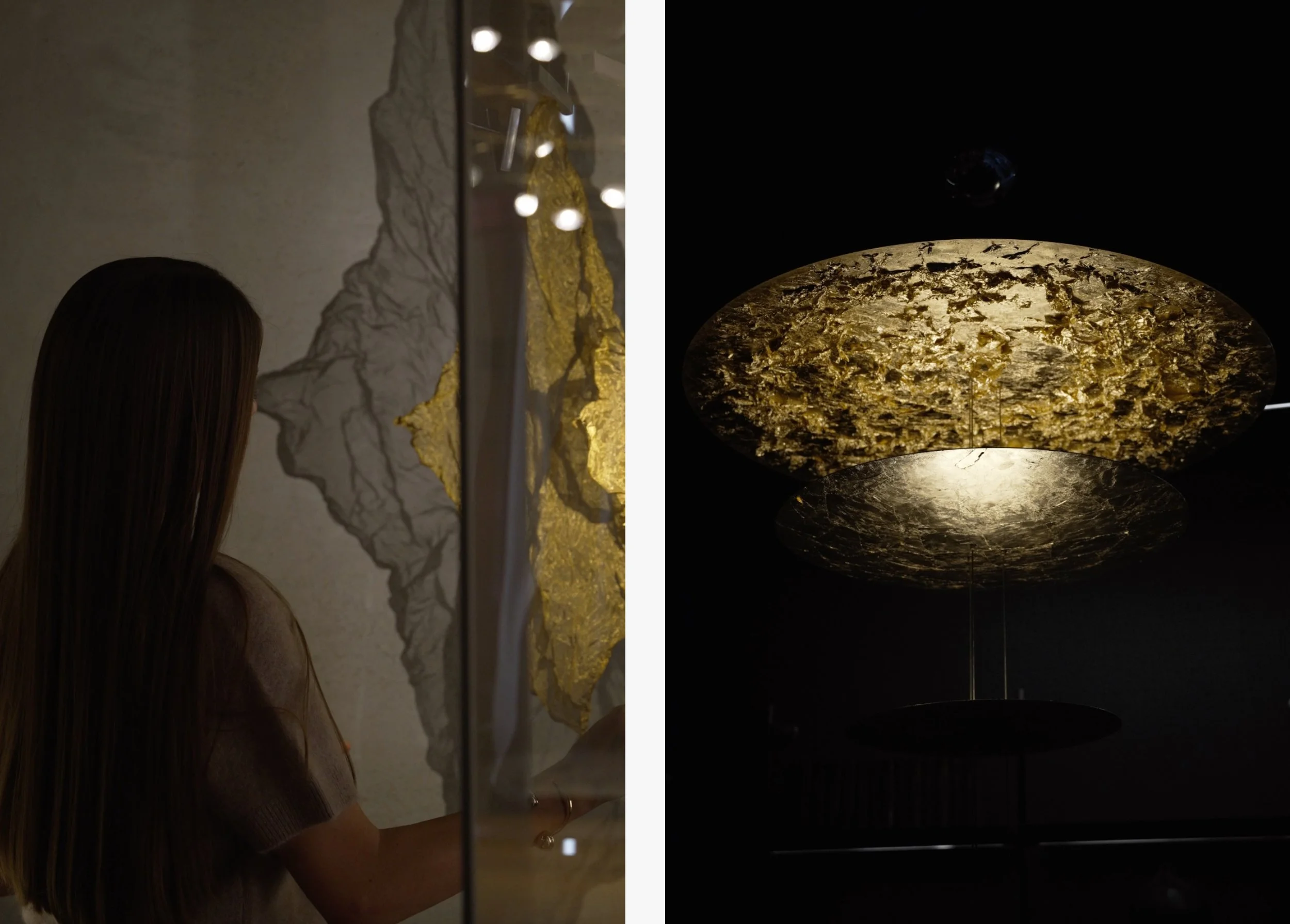
It is one of the most important factors influencing how we perceive a space. It affects the user’s comfort, sense of orientation, mood, and perception of the interior’s materials, colors, and proportions.
The lighting strategy is developed individually for each project, taking into account its function, context, and the user experience. It serves more than just a technical purpose. It creates the atmosphere of a space, enhances its character, and reinforces the design intent.
06 The Invisible Layer
Scent
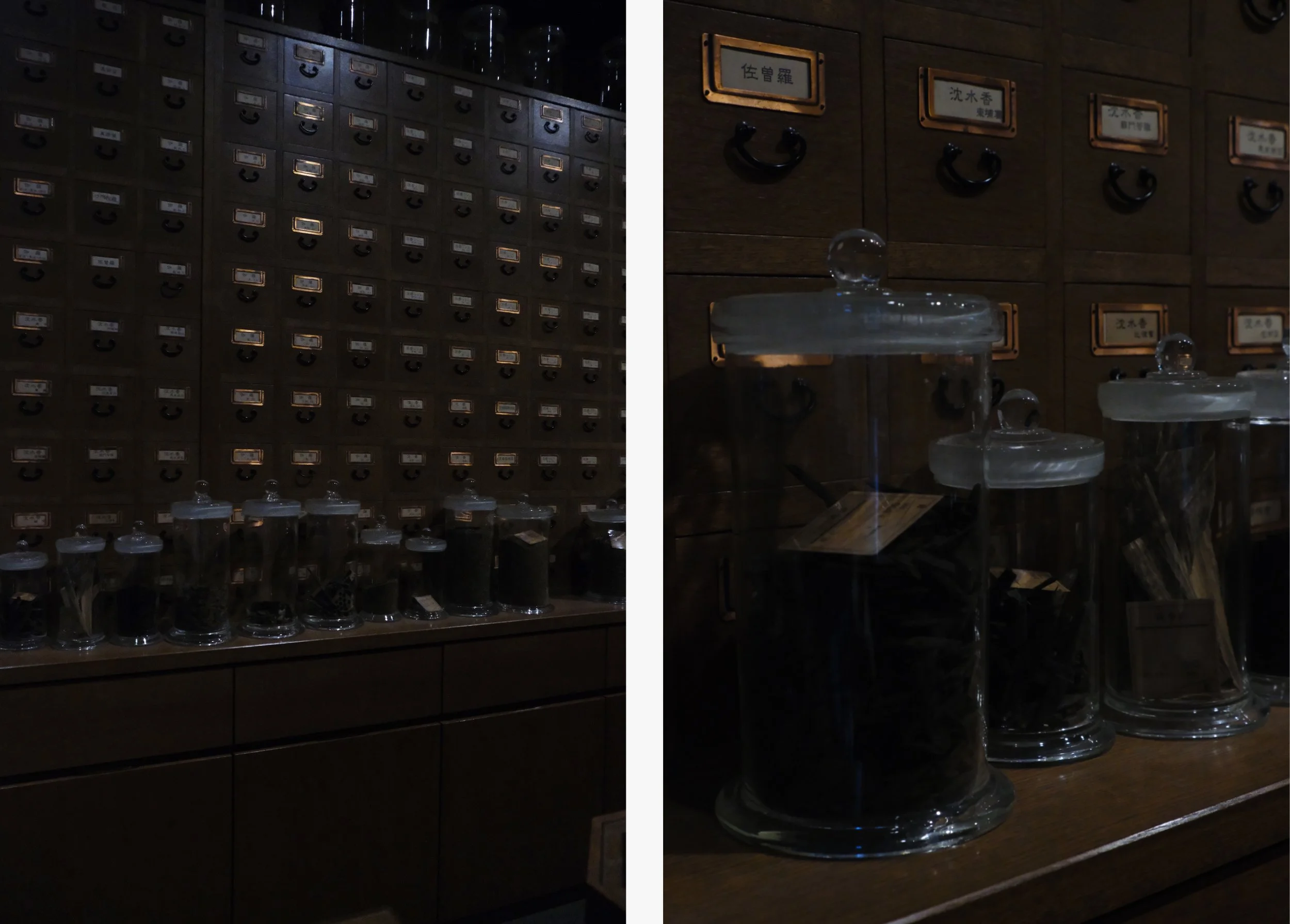
It is one of the most powerful vehicles for memories and emotions. It influences the way users perceive a space, creates associations with a place, and reinforces its character and recognizability.
The design of the olfactory experience is given the same attention as the selection of materials, lighting, and art. In select projects, I draw inspiration from the Japanese art of Kōdō and the tradition of incense appreciation, incorporating scent as an integral part of the spatial experience.
A carefully chosen scent enhances the atmosphere of a place, creates a sense of presence, and leaves a memory imprinted on the body.
07 Atmosphere
Lighting Scenes
The quality of a space is not determined solely by its appearance. What matters most is the user’s experience—how they perceive the space, how they move through it, and how long they want to stay there.
Through the use of light, proportions, and composition, an atmosphere is created that promotes comfort, relaxation, and a positive experience of the space. It is this atmosphere that often becomes one of the most important distinguishing features of a design.
08 Final Layer
Color
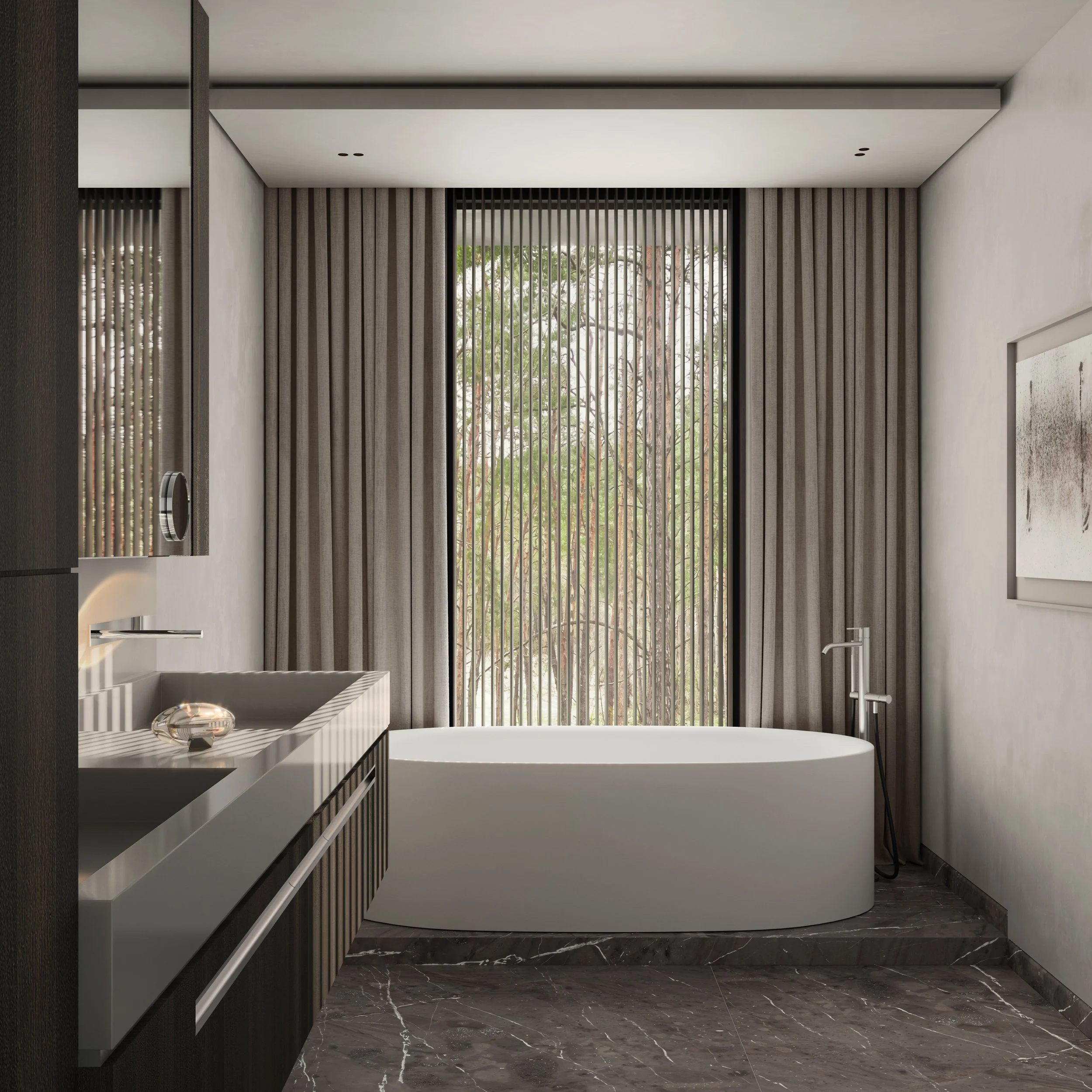
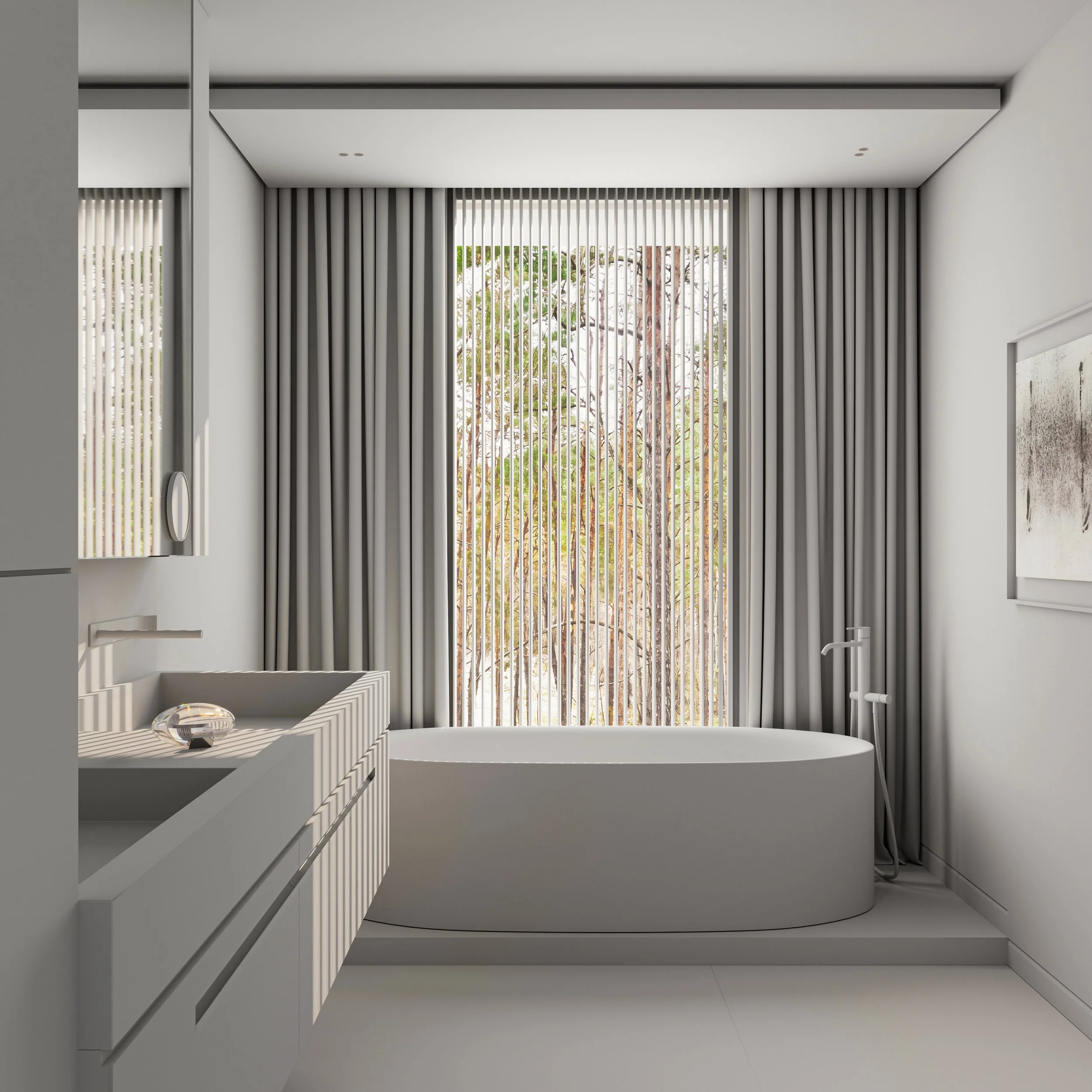
The process begins with renderings created without color, materials, or finishes, which allows us to focus on proportions, function, movement, and the relationship between people and space.
Materials, light, art, and scent emerge gradually, building successive layers of experience. Color is the final element in the process. It appears once the space has already been defined and all design decisions form a cohesive whole.
As a result, the project is not based solely on visuals, but on a deliberately crafted user experience.